Sailing Croatia with Kids: What We Learned from a Week on a Lagoon Catamaran
We’ll be honest: we had questions before we went. A 9-month-old on a catamaran for a week in the Adriatic sounds like either the best idea or a complete disaster, depending on who you ask. We asked a lot of people. Got a lot of opinions. Then we just went.
It was one of the best weeks we’ve had on the water. Not despite the baby. Genuinely because of him too. And talking to other families who’ve done it with children of all ages, the story is usually the same: they wished they’d done it sooner.
Here’s what we learned, what surprised us, and what we’d do differently next time.
Why a catamaran changes everything
A monohull with kids is doable. A catamaran with kids is genuinely comfortable. The difference matters more than you’d think.
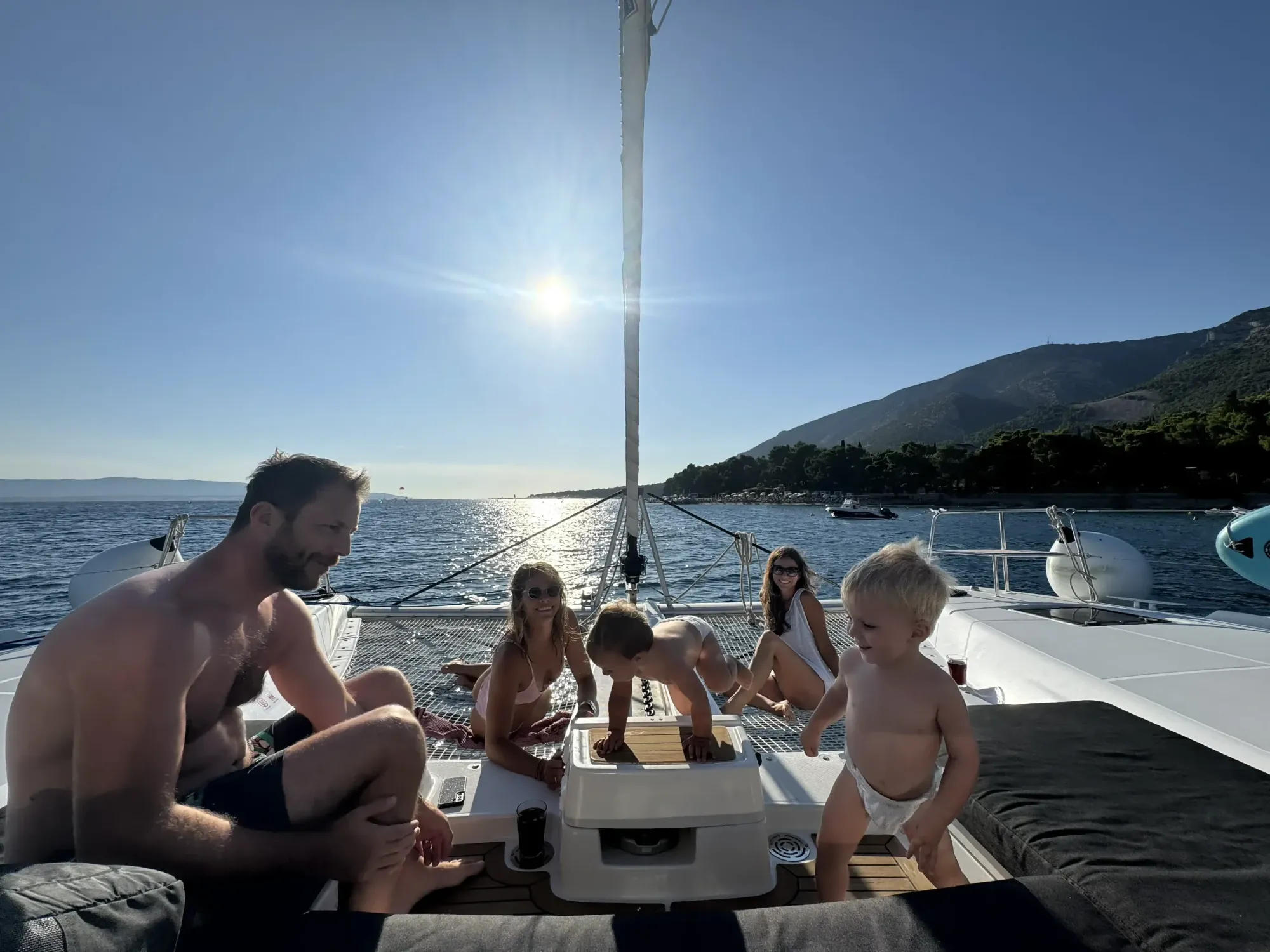
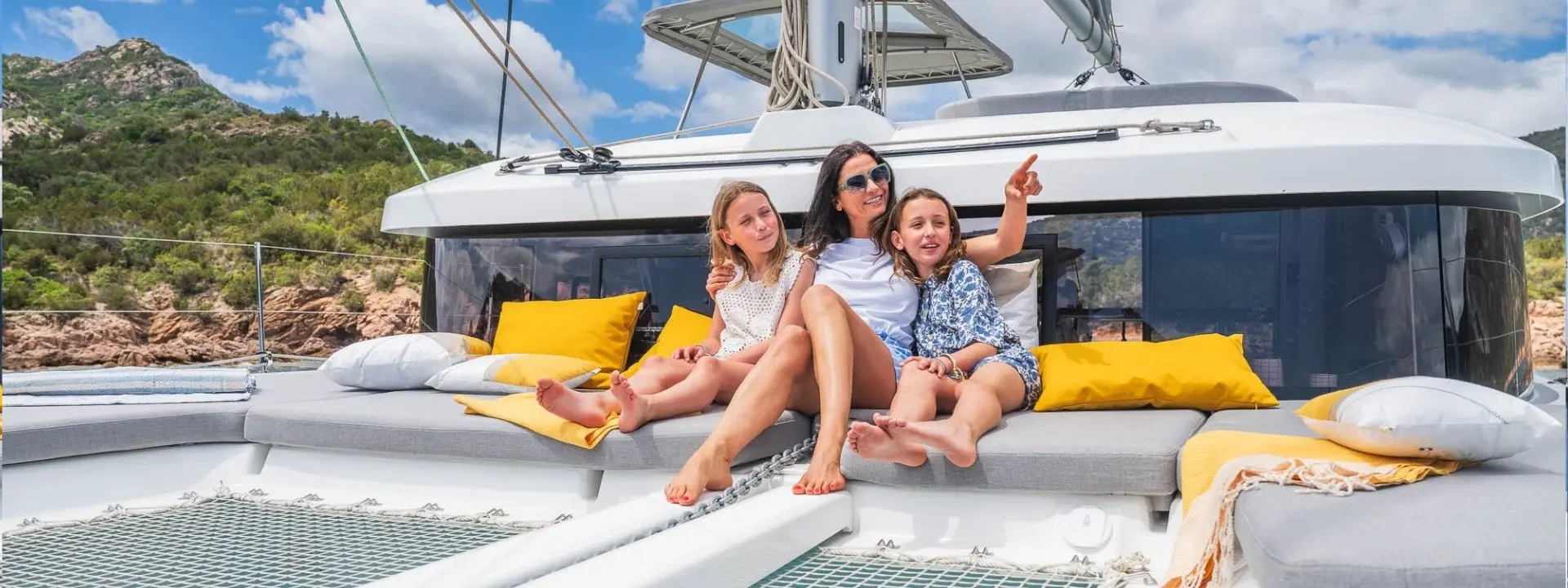
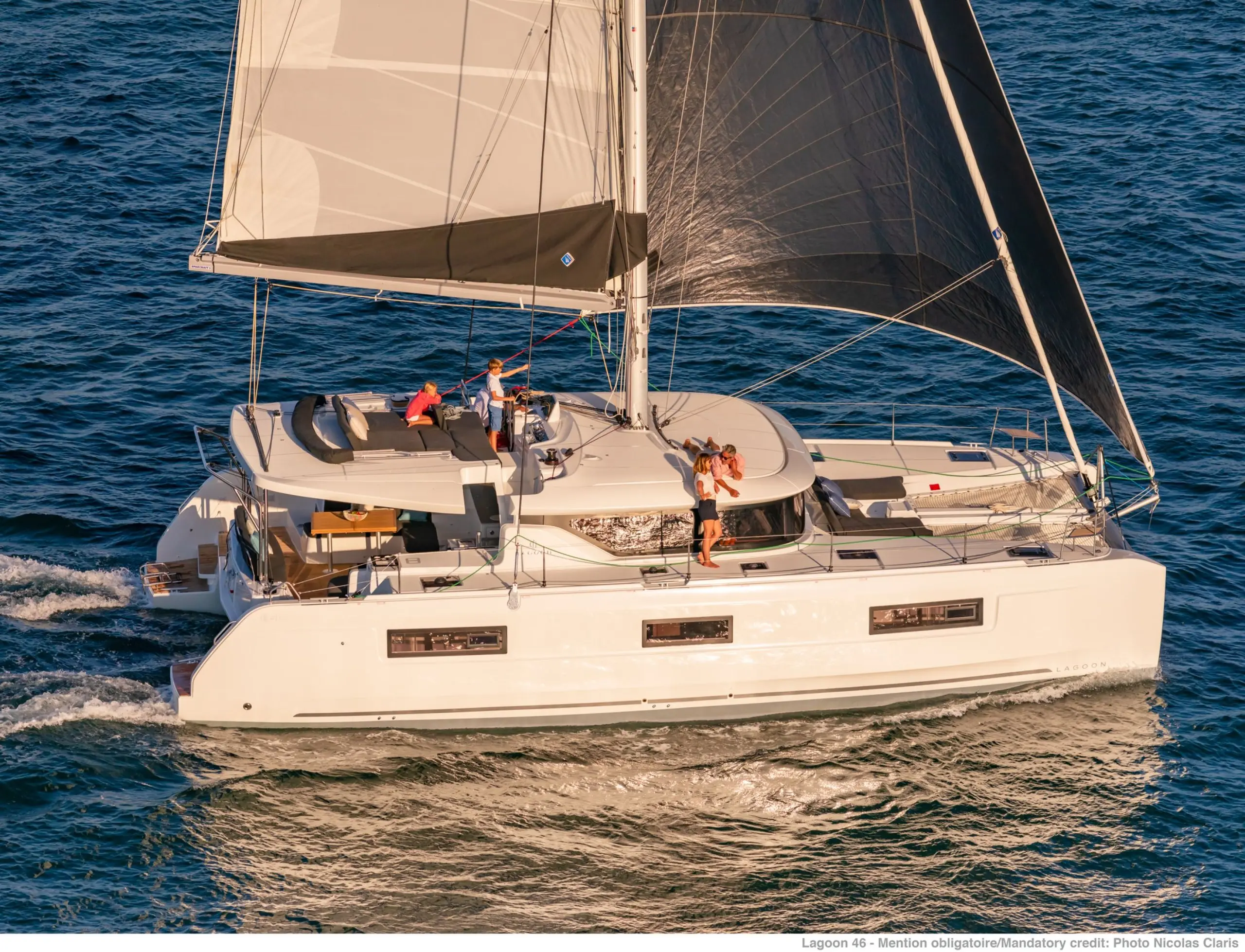
Stability alone changes the experience completely. A catamaran barely heels. Nothing rolls off, nobody is constantly bracing, and a toddler isn’t tipped sideways mid-snack. On a Lagoon, the cockpit is wide and flat, the saloon is spacious enough for actual play, and the separate hulls mean a sleeping baby in one cabin doesn’t mean the whole boat is on silent mode.
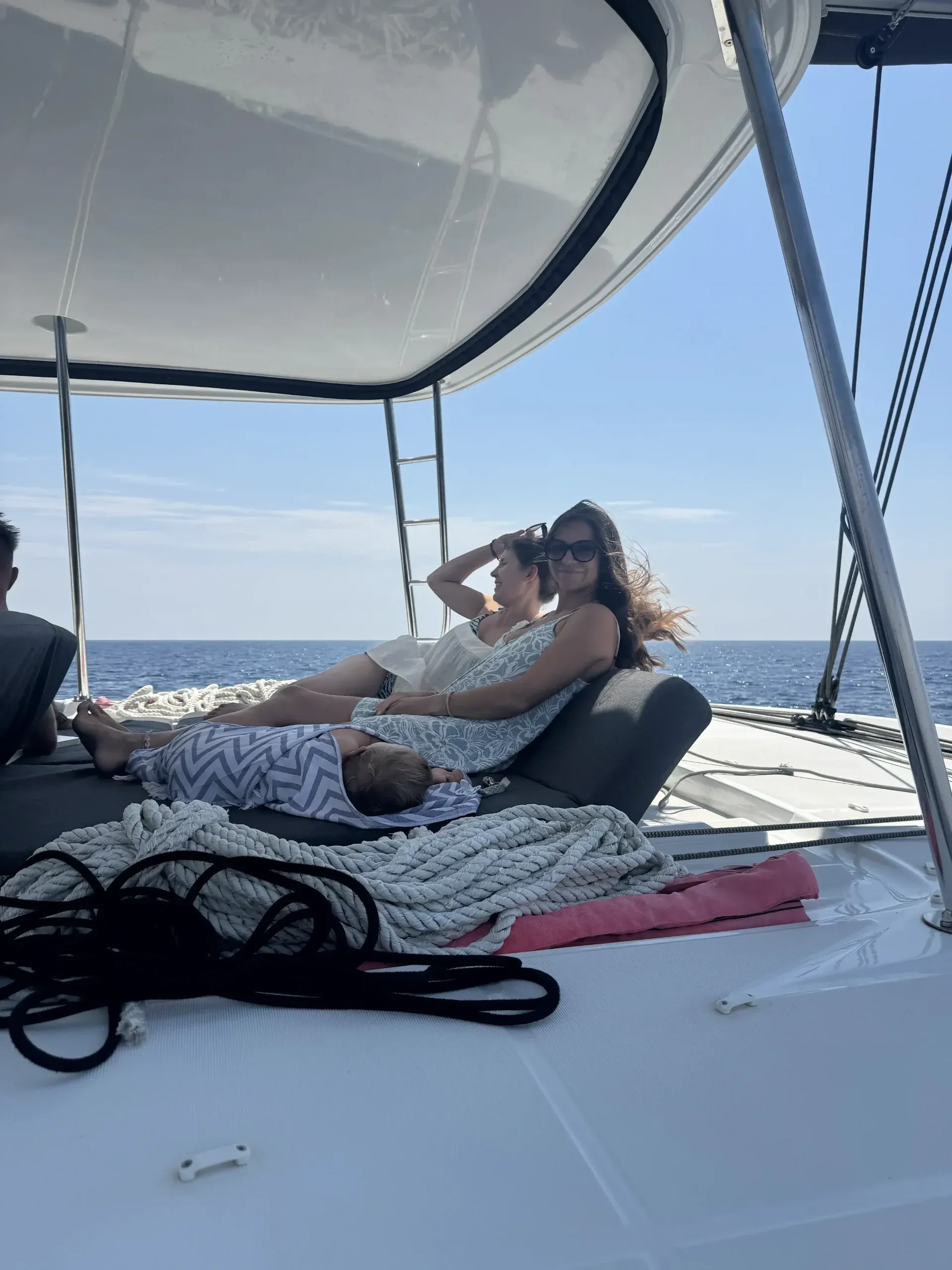
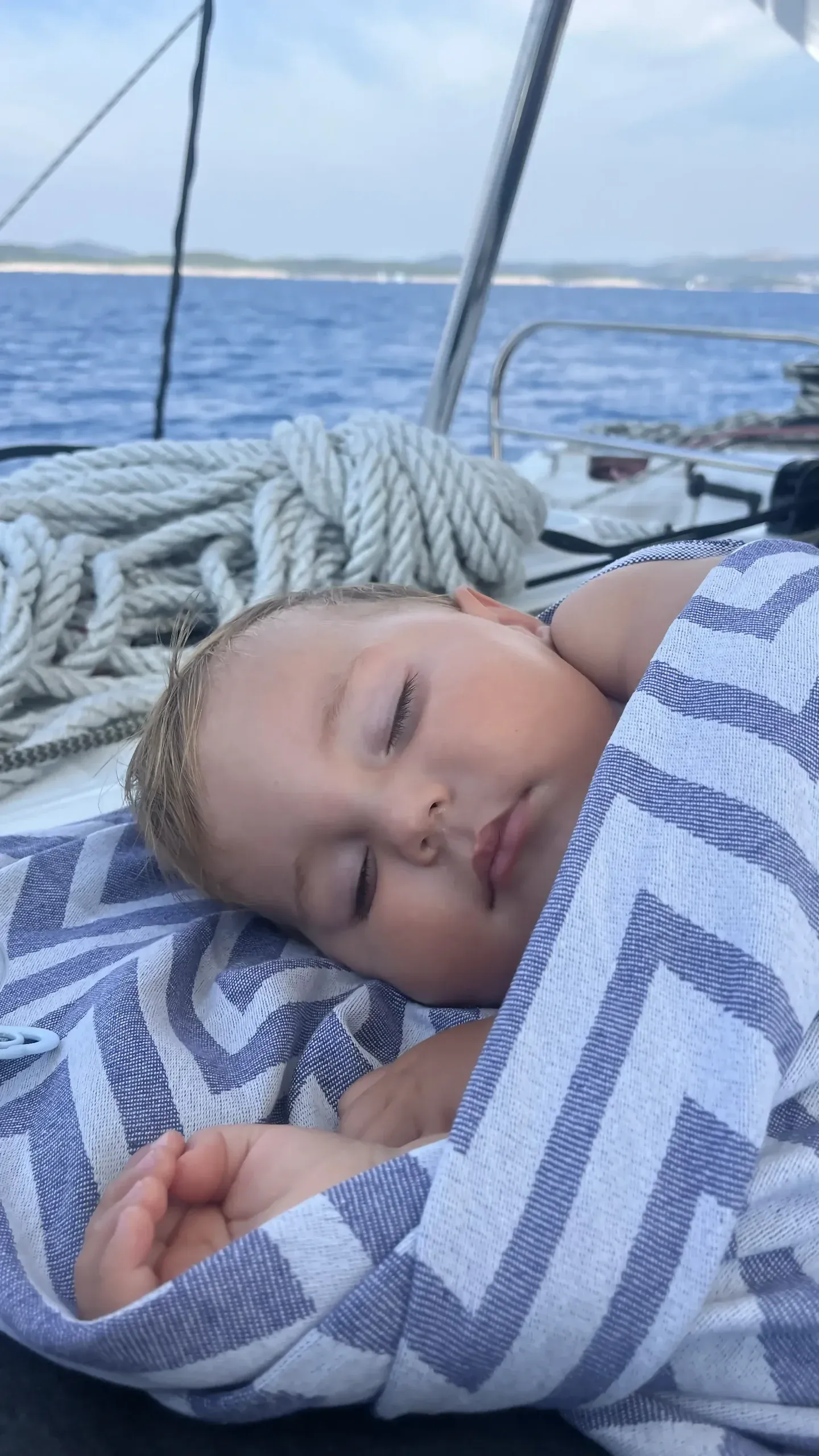
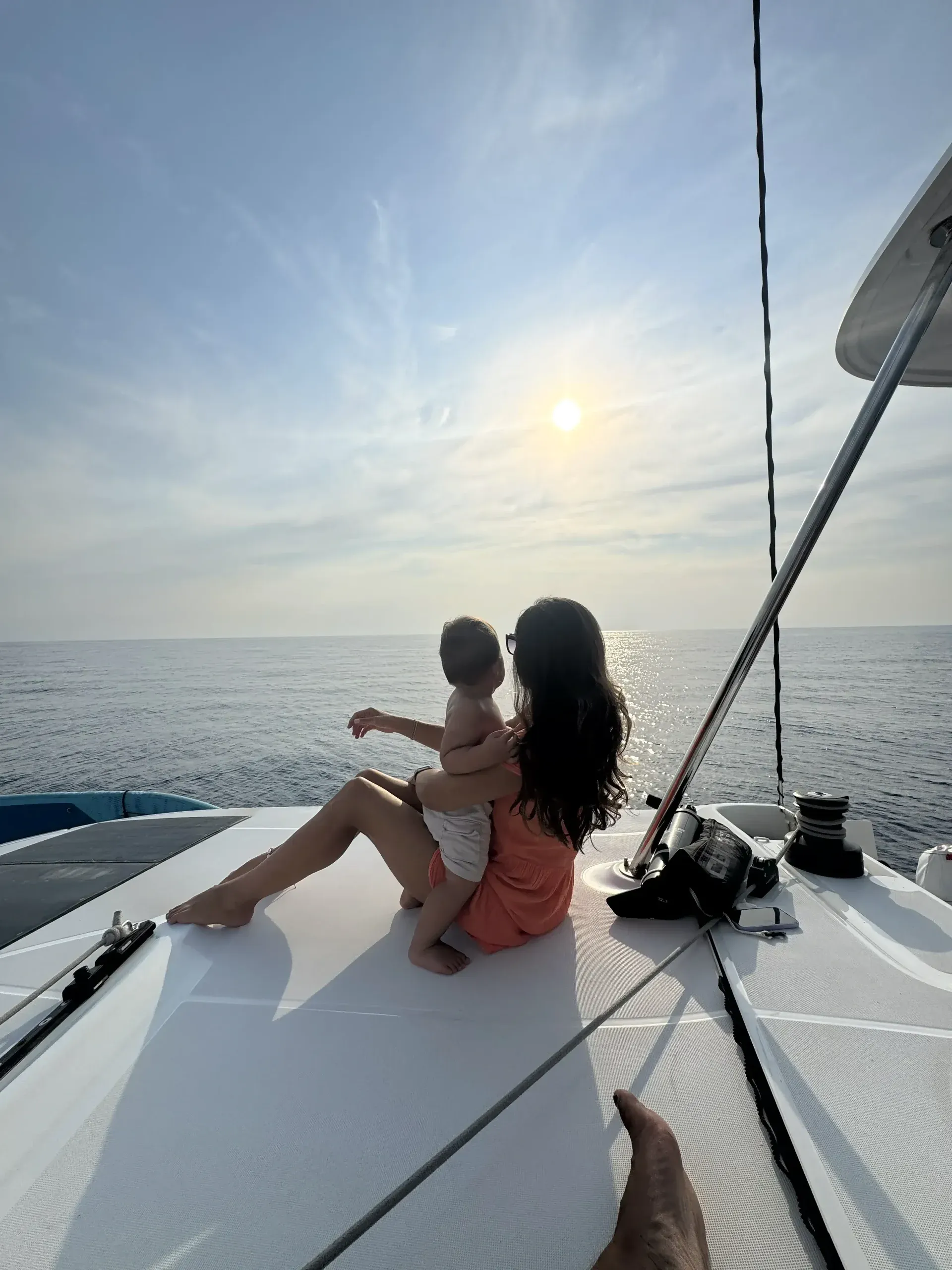
Then there’s the motion at anchor. Babies and young children fall asleep faster on a gently rocking boat than almost anywhere else. It’s a running joke among sailing parents. You spend months on every sleep trick, then a quiet bay in Dalmatia solves it in five minutes.
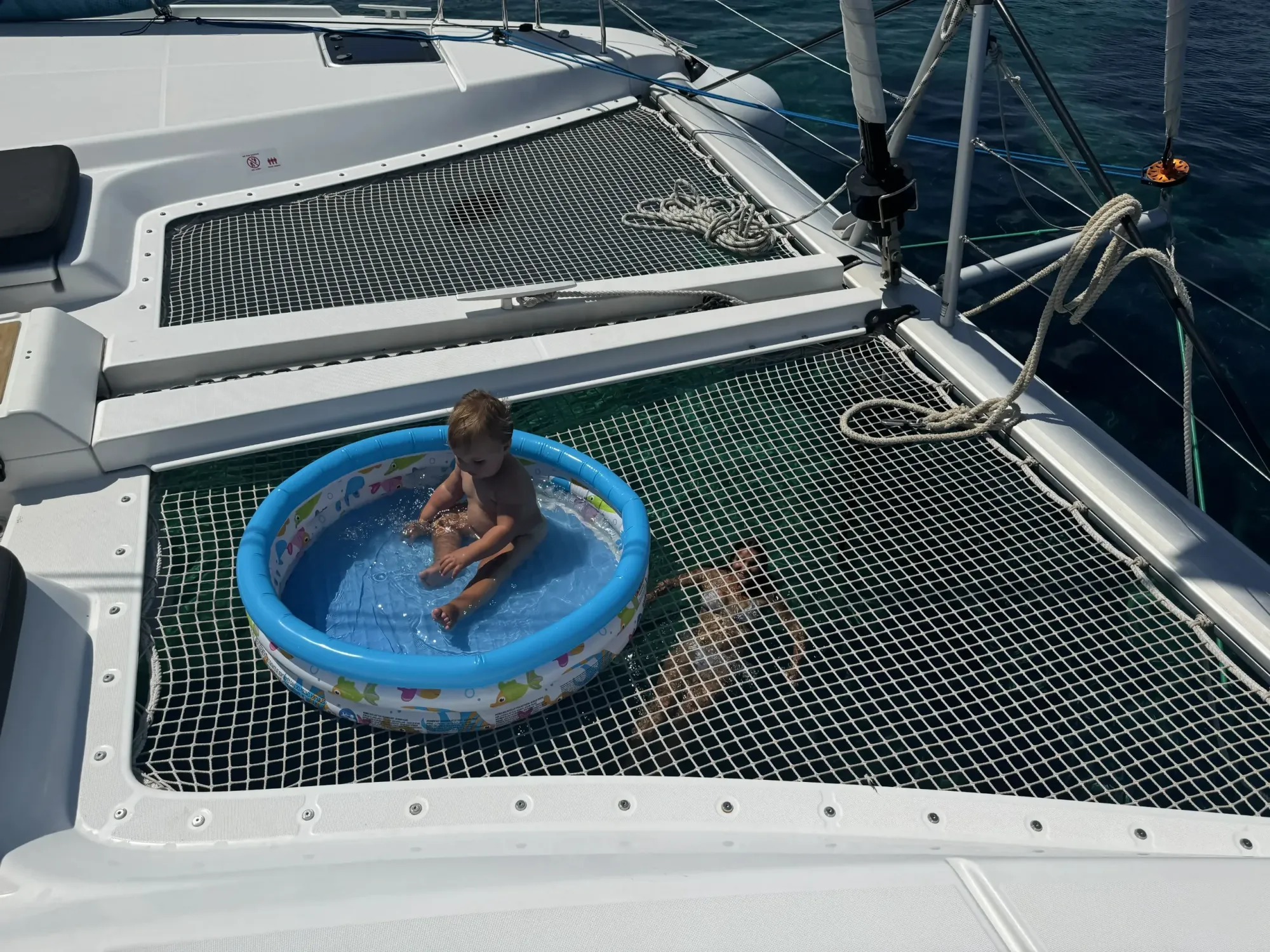
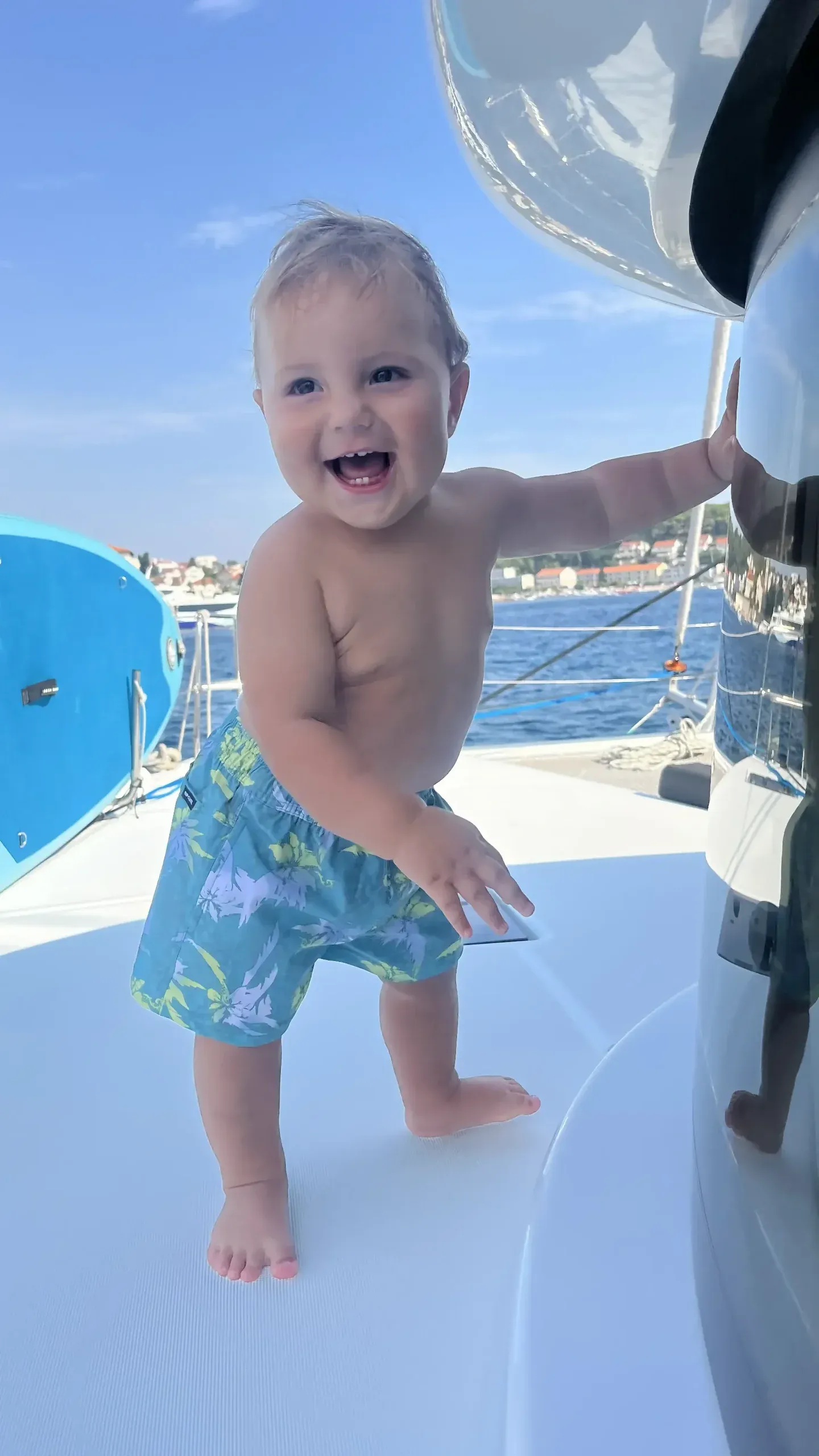
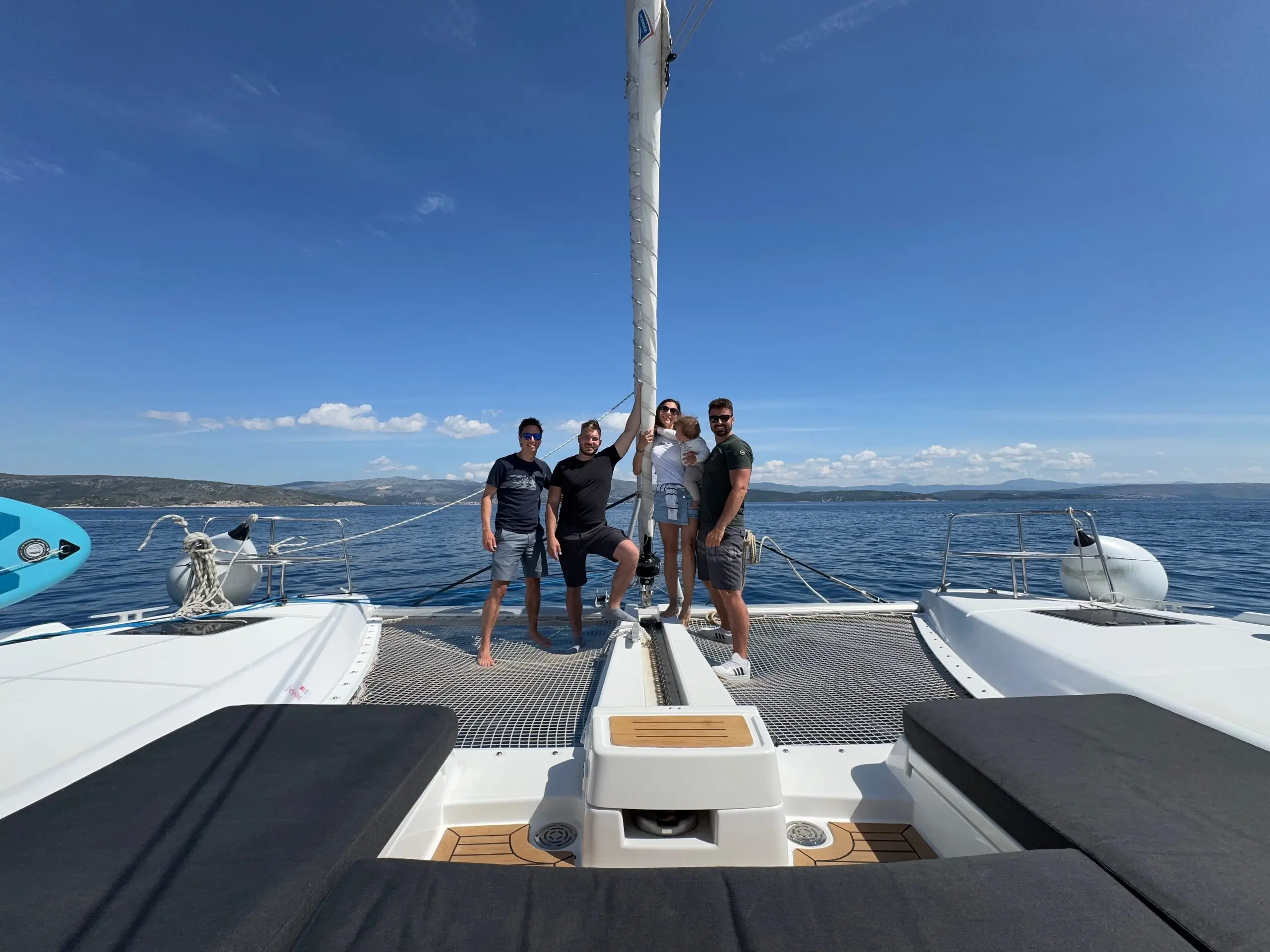
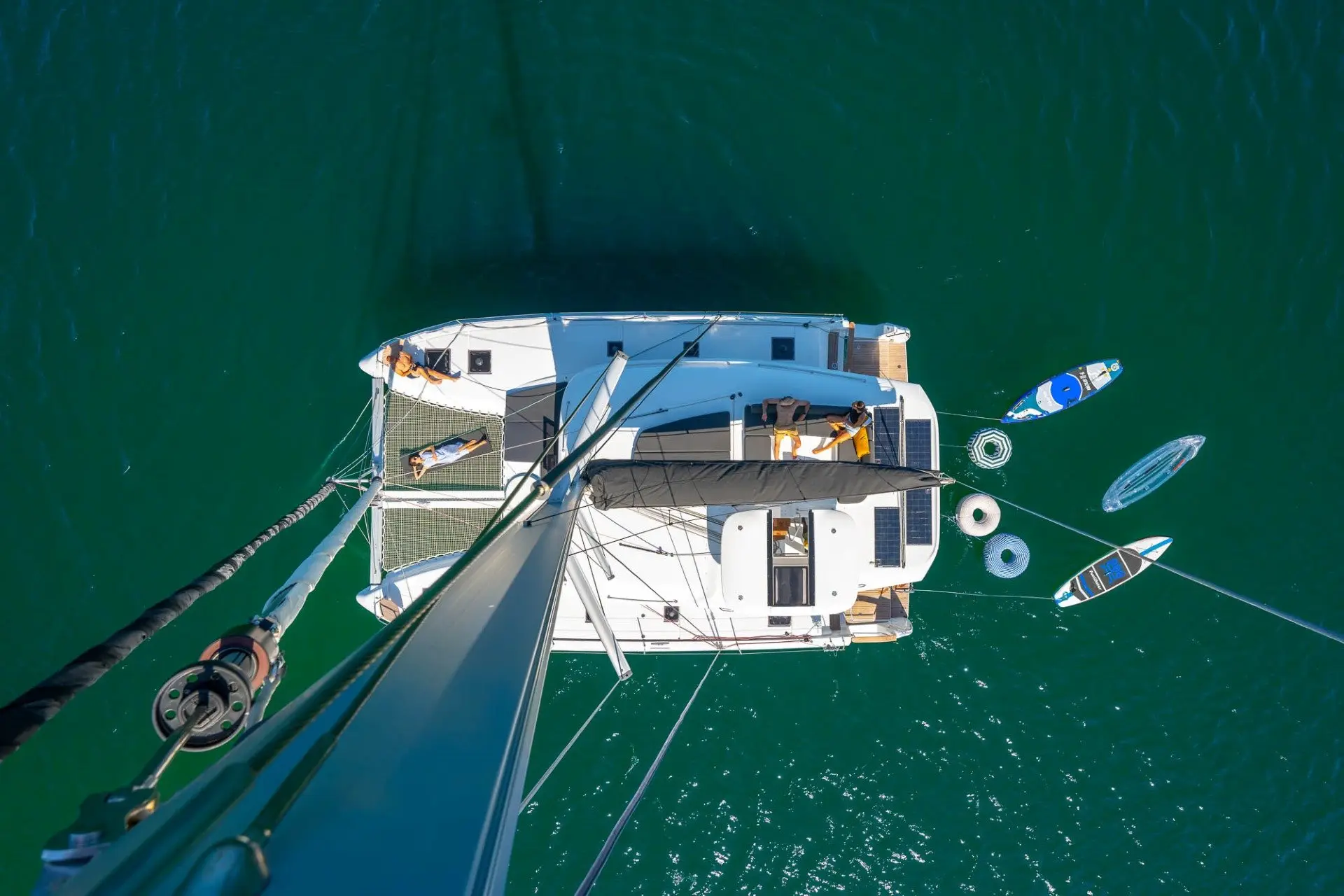
Older kids have even more to love: the trampoline nets at the bow, the swim platform, the tender rides to shore, the snorkelling off the back of the boat. A catamaran is essentially a floating adventure playground.
Why May, June and September are the best months for families
We sailed in September and we’d do the same again without hesitation. May and June work equally well. Here’s why the shoulder season is the smart choice when you’re travelling with children:
- No crowds. Anchorages and marinas that are impossible in July are quiet or empty. You get the bay largely to yourself: easier tender landings, no noise at night, room to breathe.
- Better temperatures for kids. Mid-20s during the day. Warm enough for full days in the water, without the punishing heat of peak July when keeping small children out of the sun becomes a full-time job.
- Calmer conditions. May, June and September in central Dalmatia are generally settled. Shorter legs are easier to plan, swell is lighter, and the weather is more predictable.
- Lower prices. Pre- and post-season rates for what is genuinely a peak-quality experience. The sea is the same colour. The islands are the same. The price is not.
By age: what to expect on board
Babies under 12 months
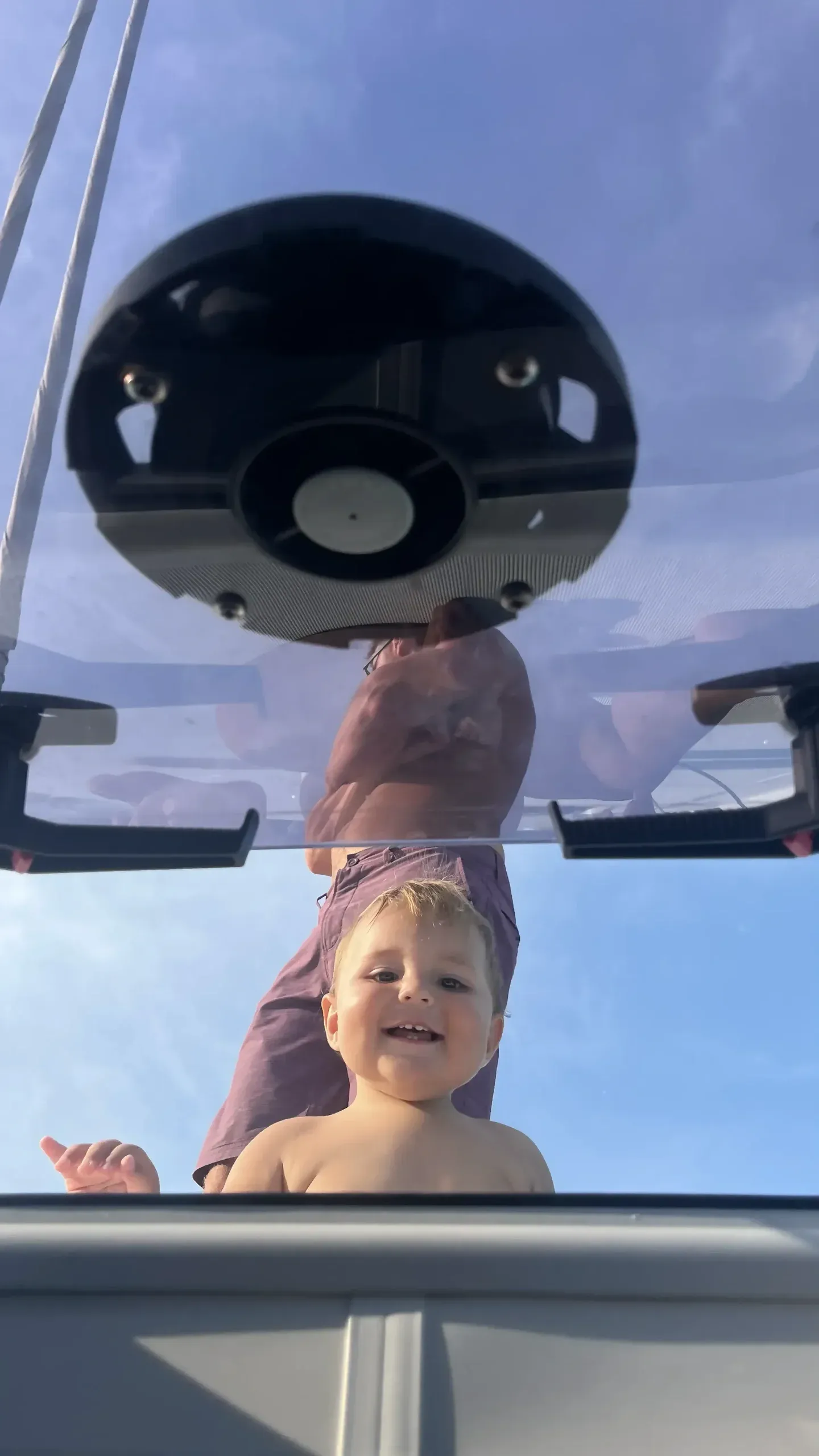
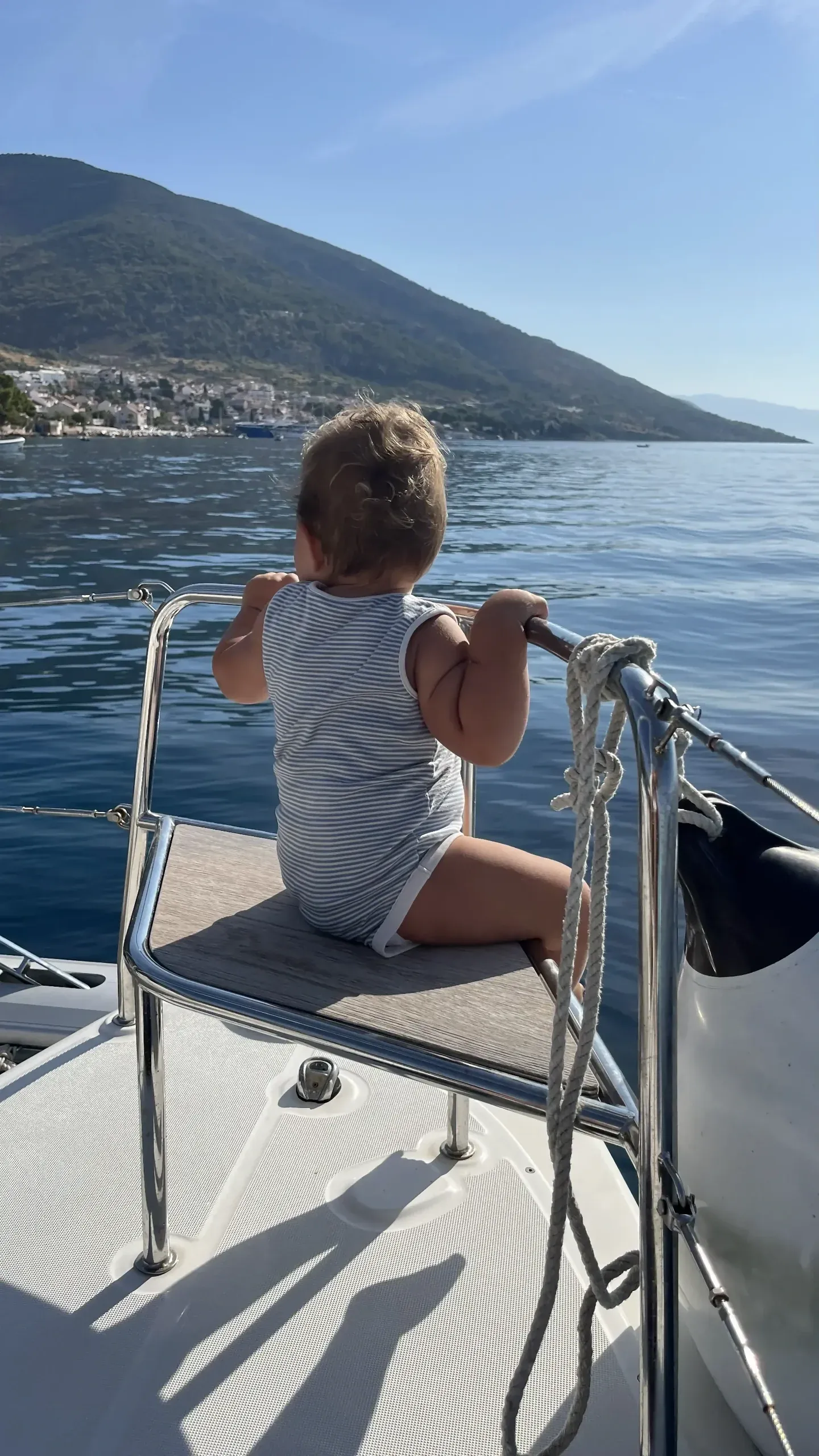
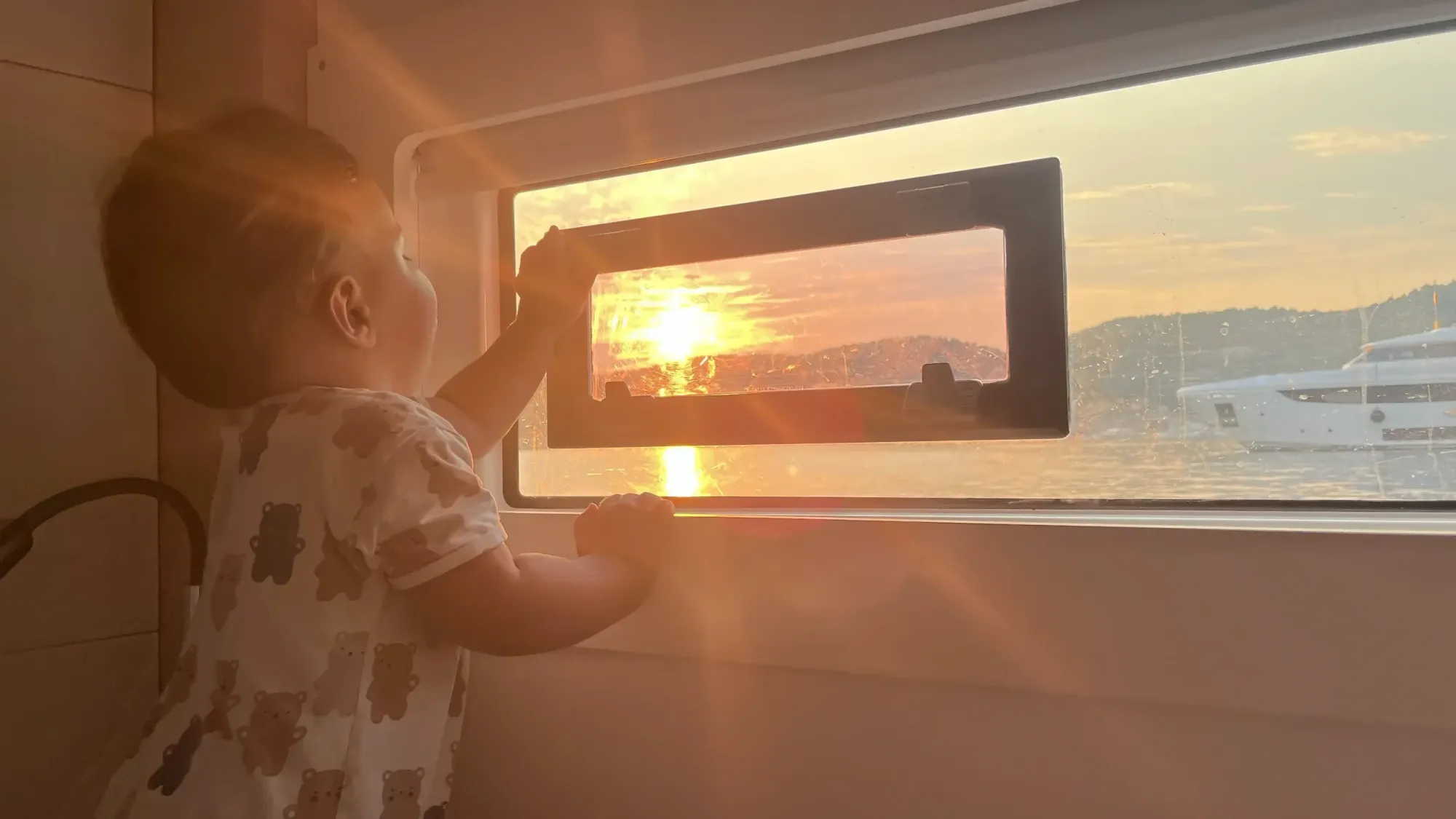
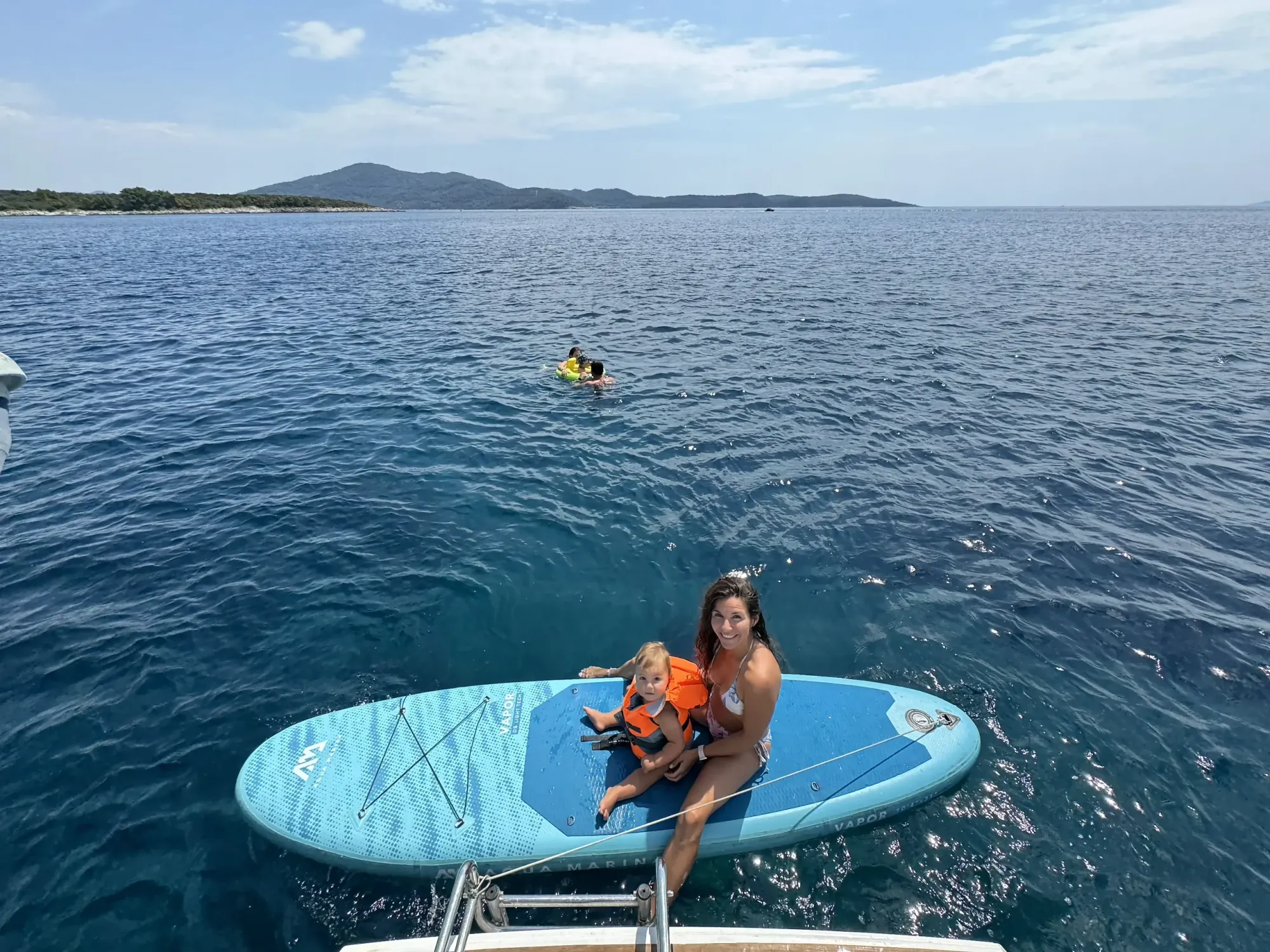
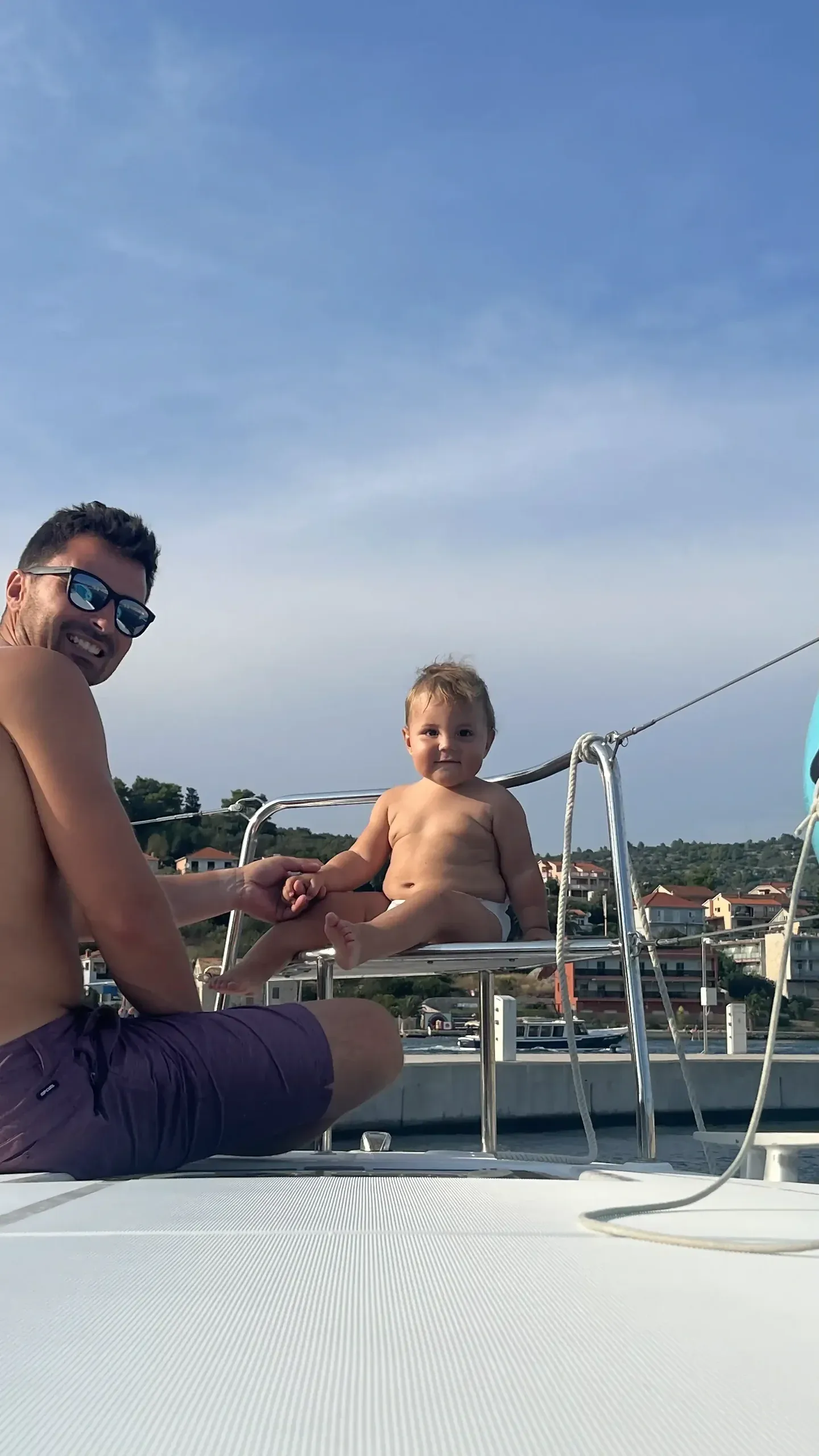
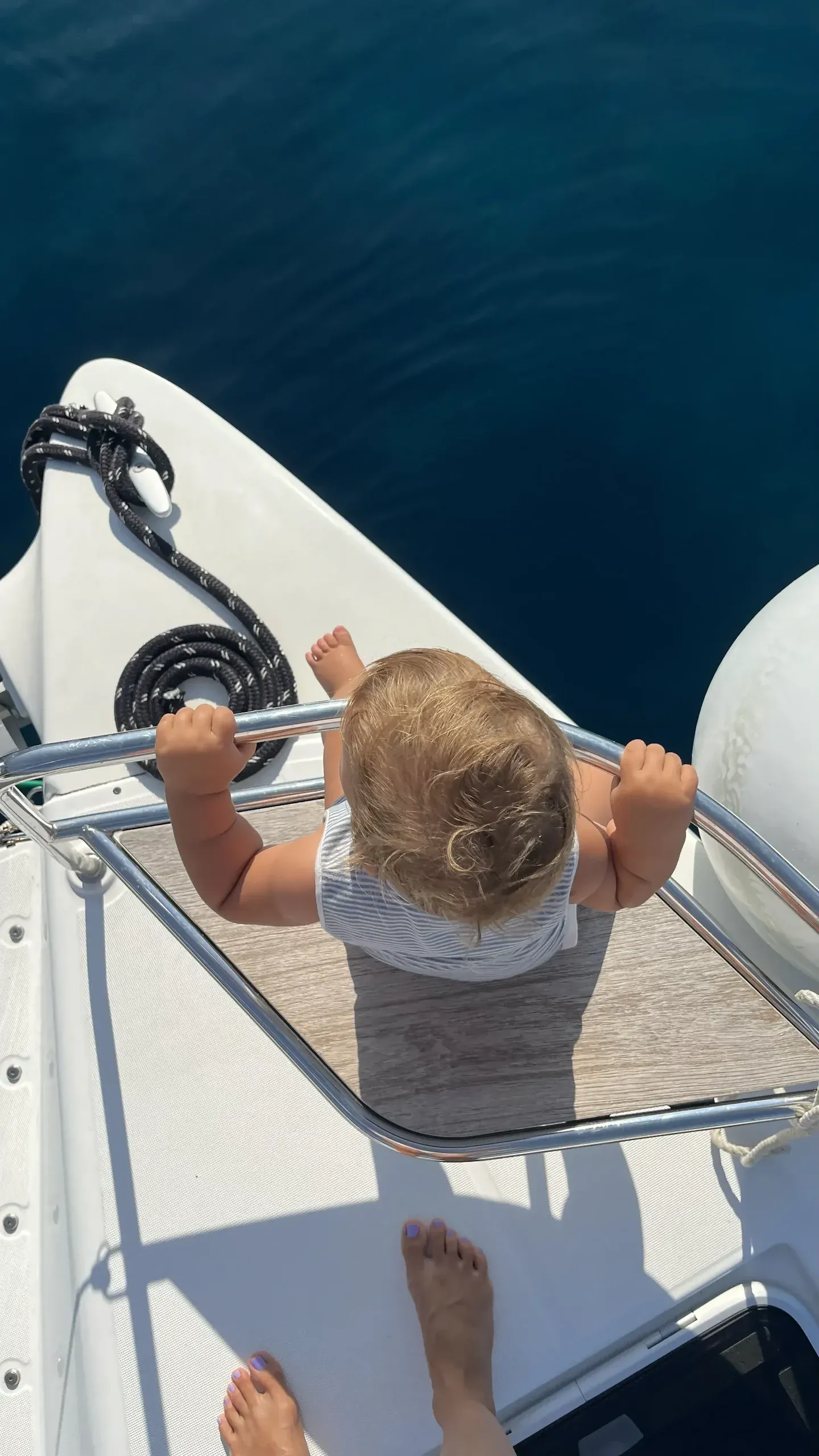
Counterintuitively, this is one of the easiest age groups to bring on a boat. They can’t walk into danger yet. They’re fascinated by water, light, and movement. They sleep beautifully with the motion at anchor. He spent most of the week either in someone’s arms watching the horizon or asleep in the cabin. By the end of the trip, half the anchorage knew his name.
The main practical challenge is logistics. Nappies, food, and kit take up space. Pack smart, bring more supplies than you think you need, and don’t rely on finding specific baby brands in small island shops.
Toddlers (1–3 years)
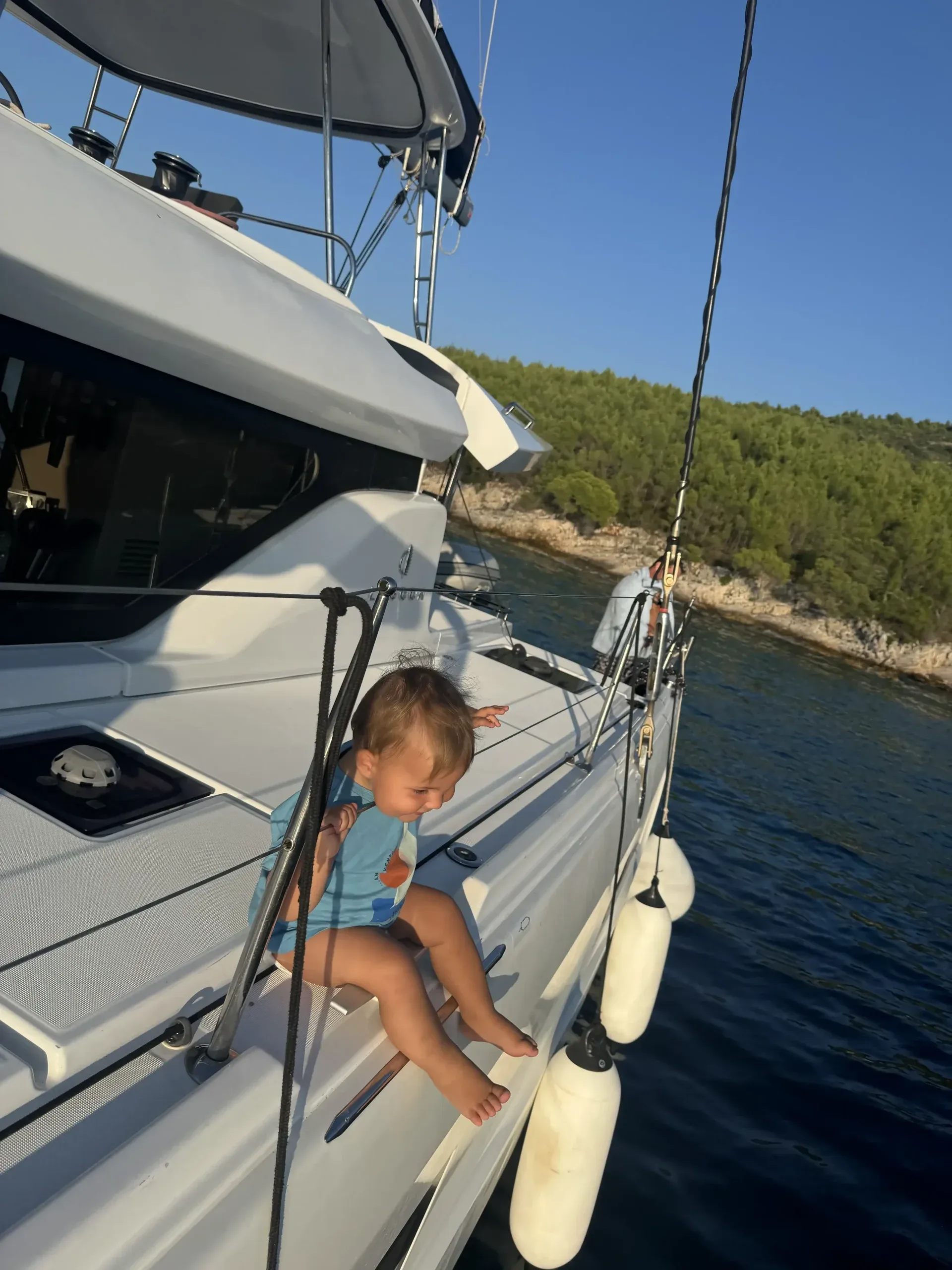
The most demanding age on a boat. They want independence but don’t understand edges. You need one adult specifically watching at all times on deck, and the energy expenditure for parents is real. That said, the reward is equally real: toddlers are completely captivated by the sea, by dolphins, by tender rides, by the simple novelty of living on the water. They sleep incredibly well. Fresh air and constant stimulation knock them out early every evening.
A hostess on board makes an enormous difference at this age. Having someone handle meals and provisioning means the adults can focus entirely on the child rather than splitting attention between the galley and the cockpit.
Young kids (4–10 years)
This is the sweet spot. Old enough to understand basic safety rules, young enough to be genuinely amazed by everything. Snorkelling off the back of the boat, spotting fish, helping the skipper with lines, exploring island towns on foot. Every day feels like an adventure to them because it is one. The bow trampolines on a Lagoon become their personal territory within about ten minutes of boarding.
Keep sailing legs to 2–3 hours and plan something at each stop: a swim, a walk, an ice cream in the village. That rhythm works perfectly.
Teenagers
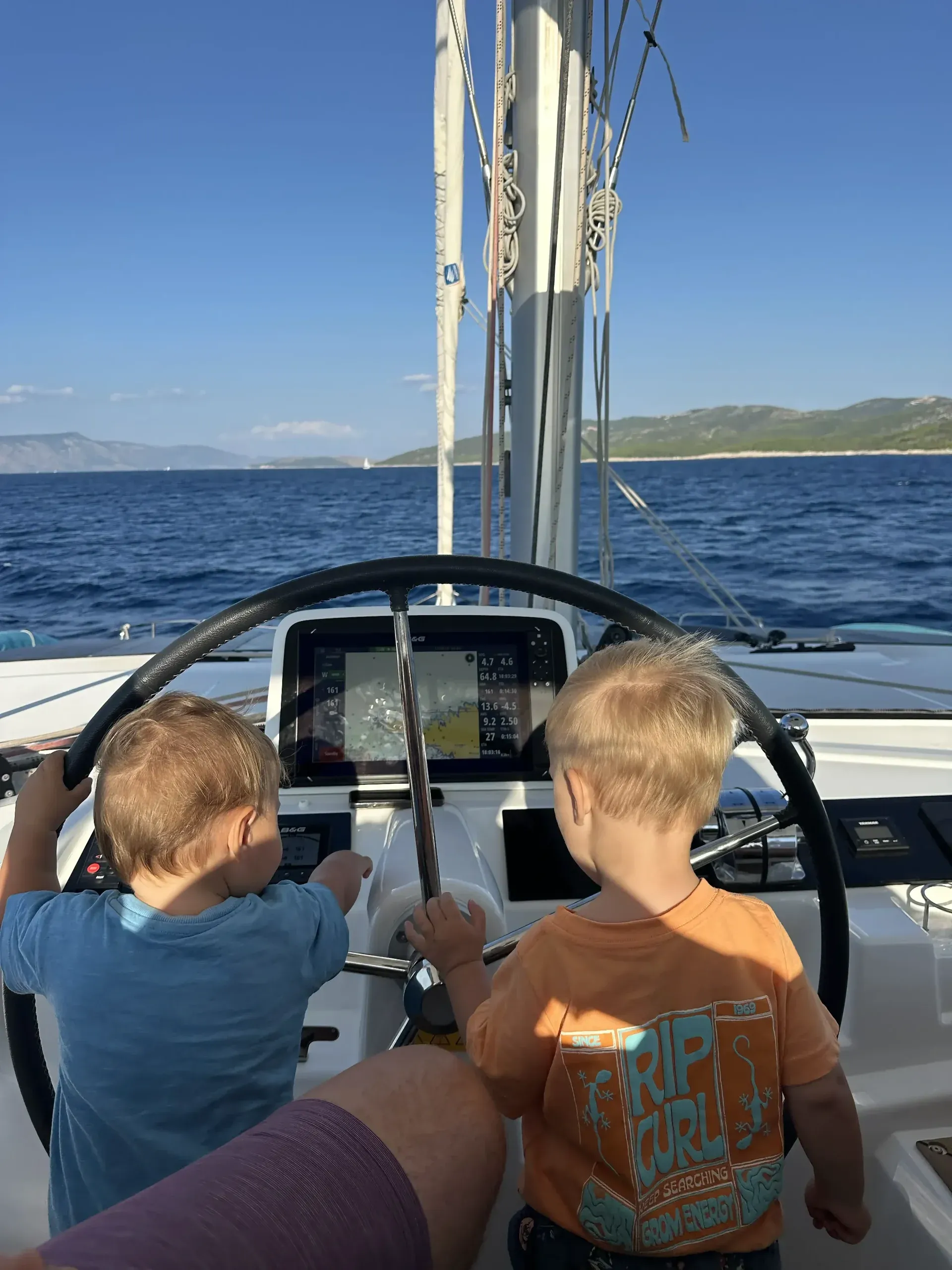
Harder to impress, easier to manage. Most teenagers who arrive slightly reluctant are converted within 24 hours. Freedom, water sports, good food, and the scenery do the work. Give them a role on the boat (handling a line, watching the chart plotter, helping anchor) and they engage completely. A SUP or kayak in the tender makes a big difference for independent teenagers who want their own space.
Practical tips that actually matter
Sun protection is non-negotiable
The reflection off the water amplifies UV a lot, even in the shade under the bimini. UV suit, factor 50, a sun hat that actually stays on. Keep small children out of direct sun between 11am and 3pm. This is the rule we stuck to hardest and we don’t regret it.
Life jackets while sailing
On from the moment the engine starts or the sails go up. It becomes routine within a day and children stop noticing it quickly. Get the right size. Children’s life jackets should be tried on and adjusted before the trip, not at the dock on departure morning.
Short legs, good stops
Two to three hours sailing, then somewhere interesting to arrive. The central Dalmatian coast is ideal for this. Islands are close together, there’s almost always a bay or a village within reach, and you’re never committed to a long haul if someone needs a break. Plan the route loosely and let the day’s mood shape it.
Eating ashore
Croatian konobas are family-run restaurants. Relaxed, used to children, always with something simple on the menu. Pasta, grilled fish, bread. Nobody gives you a second look with a baby or a noisy table of kids. It’s one of the nicest things about Croatia as a family destination.
What to pack for kids
| Category | What to bring |
|---|---|
| Sun protection | UV suit, factor 50 sunscreen, chin-strap sun hat for babies/toddlers |
| Safety | Child life jacket in the correct size. Try it on before you travel |
| For babies | More nappies, formula and pouches than you think. Island shops are limited |
| Medical kit | Liquid paracetamol, antihistamine cream, ear drops, plasters, your usual kit plus extra |
| Swimming | Swim nappies, rash vest, small inflatable float for calm bay swimming |
| Getting around | Compact umbrella stroller. Fits in a forward locker, useful for marina evenings |
| Entertainment | Waterproof toys, snorkel kit for older kids, downloaded shows for longer legs |
The honest verdict
The question we get most is: should we wait until the kids are older? Our answer, every time: no. There is no perfect age. There is no moment when it becomes effortless. What there is, at every age, is a week on the Adriatic that children remember for years: the swimming, the islands, arriving somewhere new every morning.
The sea doesn’t ask how old your kids are. It just does its thing. And somehow, it works for all of them.
Frequently asked questions
What is the best age to sail Croatia with children?
Every age works. Just differently. Babies under 12 months are surprisingly easy: they can’t wander off, they sleep beautifully with the motion, and they need very little entertainment beyond the sea itself. The toddler years are the most demanding. From around 4 upwards, children get progressively more out of the experience and require less constant supervision on deck.
Will children get seasick on a catamaran?
Catamarans are far more stable than monohulls and barely heel. In the protected waters of central Dalmatia, motion sickness is rarely an issue. Keep sailing legs short, avoid heading out in strong winds, and you’ll cover most of the risk.
Is it worth having a hostess when sailing with children?
For families with young children, yes. We’d say this without hesitation. Having someone on board who handles breakfast, lunch, and provisioning means parents can focus on the children rather than the galley. It shifts the whole trip from managed chaos to something genuinely relaxing.
What is the best time of year for a family sailing holiday in Croatia?
May, June and September. Warm water, manageable temperatures, empty anchorages, and lower prices than peak season. July and August work too, but the heat and crowds add stress that you don’t need when you’re managing children on a boat.